
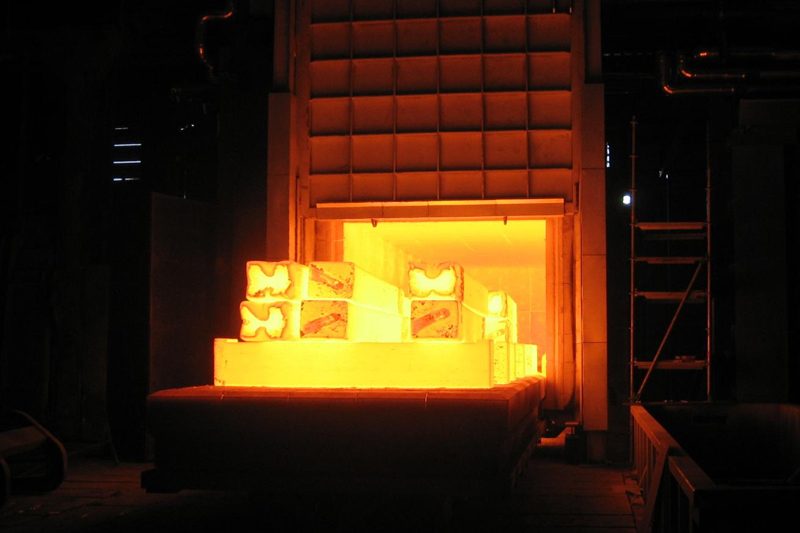
What the fans do here
Heat treatment, forging and melting furnaces need combustion air blowers sized for the burner pressure, hot air fans for recirculation in the furnace chamber, and exhaust fans on the flue that can live with gas at several hundred degrees. Dilution air blowers bring the flue gas down to a temperature the filter can accept.
Applications in this industry
| Application | What it does | Type usually selected |
|---|---|---|
| Combustion Air Blower | Feeds a burner with air at the pressure the burner register needs. Sized for the burner turndown range, and often fitted with an inlet silencer. | Backward curved and radial tipped |
| Hot Air Fan | Circulates or supplies air at elevated temperature to a dryer, oven or kiln. Selected at the hot density with the shaft and bearing arrangement built for continuous hot running. | Backward curved and backward inclined |
| Dilution Air Blower | Injects ambient air into a hot flue gas stream to bring it down to a temperature the downstream bag filter or fan can accept. | Backward curved |
| Fume Exhaust System | Hoods, ducting and an exhaust fan that capture fume at source and deliver it to a scrubber, bag filter or stack. Fan material follows the fume: stainless steel, PP-FRP or rubber lined where it is corrosive. | Backward inclined and radial tipped |
| ID Fan | Sits at the outlet of a boiler, kiln or furnace and draws the flue gas through the plant to the stack. It handles hot, dust-laden gas at large volume, so it is sized at the hot condition and checked at cold start. | Backward curved, backward inclined and radial tipped |
| Fan Silencer | An absorptive silencer at the fan inlet, outlet or in the duct, cutting fan noise with minimum pressure loss. | Silencer |
Processes in this industry
Steel Reheating FurnacesHeat Treatment FurnacesForge ShopsBrick and Refractory KilnsPlywood and Wood Processing
Equipment supplied
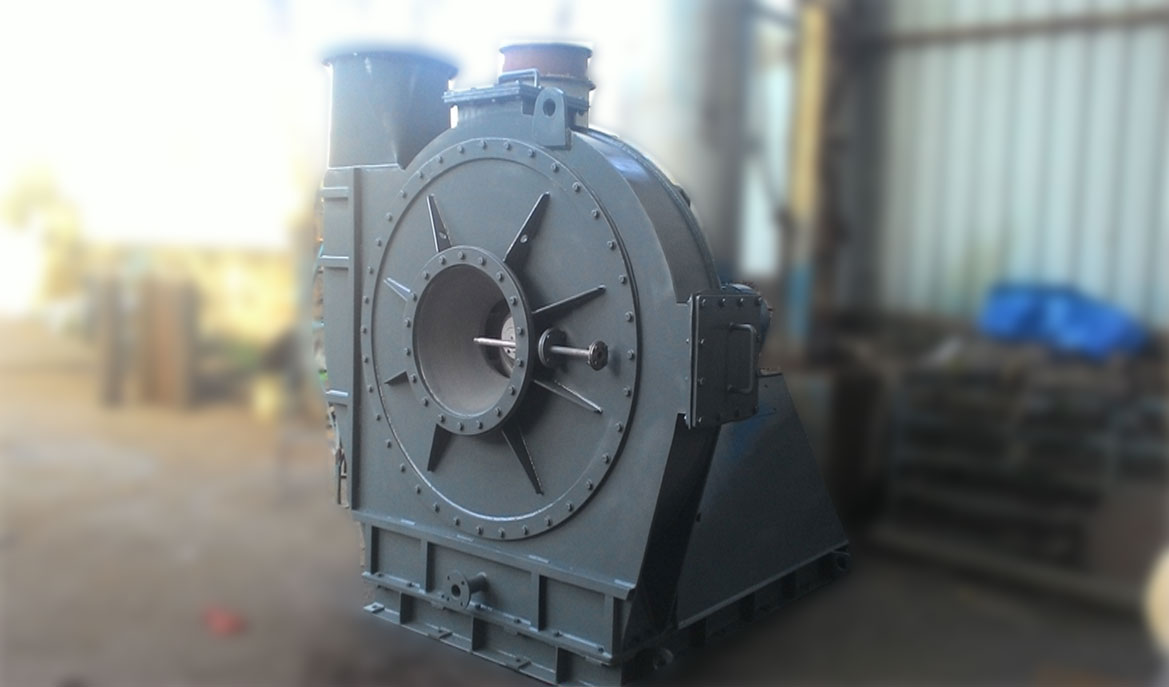
Centrifugal Fans
0.3 to 120 m³/s, 25 to 3120 mmWC single stage. Six blade configurations, three drive arrangements.
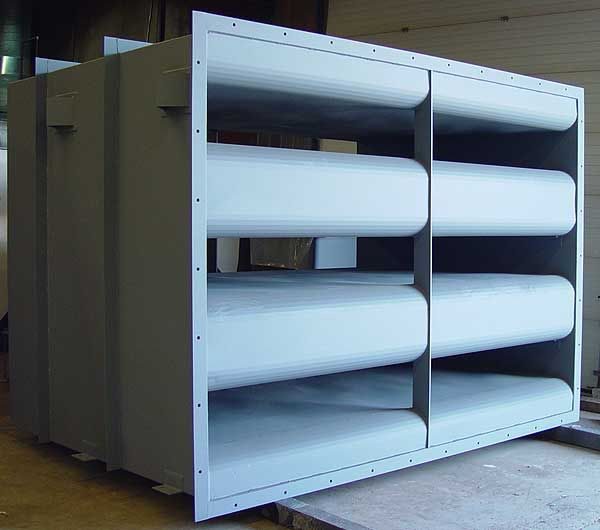
Silencer
Fan silencers for inlet, outlet and duct. Vent silencers for steam and gas blow-down.
Information needed to select or quote
- Duty point. Volume flow and static pressure at the fan inlet, with the gas density and temperature or the conditions to derive it.
- Operating conditions. Site altitude, normal operating temperature and continuous or intermittent duty.
- Gas stream. Dust loading and particle size, corrosive species, moisture, upset temperature and any tendency of the material to deposit on the impeller.
- Mechanical. Rotation viewed from the drive end, discharge orientation and motor power.