
Carbon
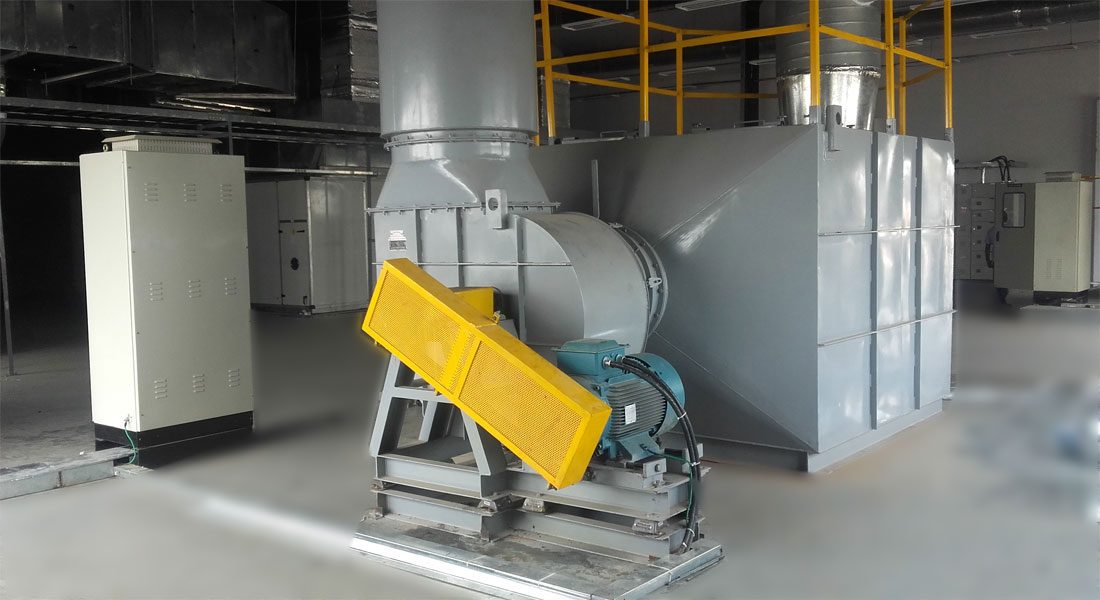
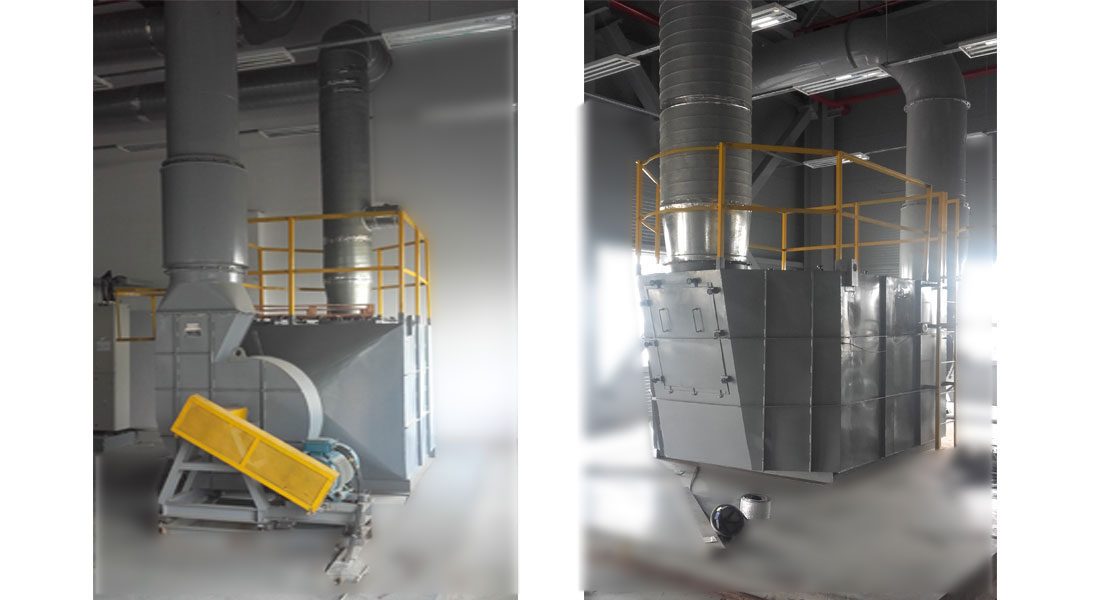
Two carbon types are available: Powder Activated Carbon (PAC) and Granular Activated Carbon (GAC). The GAC version is mostly used in air pollution control equipment and in water treatment. The gas passes through a bed of GAC in the tower; the pollutant is held on the carbon surface, and the bed is replaced or regenerated when it is spent.
Applications
- Removal of solvents and VOCs in printing and spray painting
- Removal of dioxins, heavy metals such as mercury and other residual emissions in waste incinerators
- Deodorisation and air conditioning
- Process gas cleaning
- Perchloroethylene vapour recuperation in dry cleaning
- VOC removal in foundries
Where it is used
Incinerators
Waste incinerators need an ID fan that holds the furnace under draft through the quench, the scrubber and the bag filter, on gas that is hot, wet and corrosive. Dilution air blowers cool the flue gas, wet scrubbers take out acid gas, and adsorption towers on activated carbon remove dioxins and mercury before the stack.
Chemical & Pharma
Chemical plants exhaust corrosive fumes from reactors, dryers and storage into wet scrubbers, with fans in stainless steel, PP-FRP or rubber-lined construction. Pharma plants add clean-room supply through AHUs with pre, fine and HEPA filtration, and solvent recovery through adsorption towers. MVR blowers recompress vapour on evaporators and effluent plants.
Automobile
Vehicle plants use fans on paint shop supply and exhaust, on ovens and dryers, on welding fume extraction, and for plant ventilation. Paint booth exhaust goes through wet scrubbers or adsorption towers for solvent; oven exhaust needs a hot air fan; the body shop needs fume extraction into bag filters.
Surface Coating
Painting, powder coating and galvanising lines exhaust solvent vapour, overspray and acid fume. Booth exhaust fans in stainless steel or FRP feed wet scrubbers or adsorption towers, ovens use hot air fans, and pickling tanks need fume extraction with mist eliminators.
By process
The same duty, selected for the gas of each process.
Information needed to select or quote
- Gas volume and temperature. Actual flow at the inlet, normal and upset temperature, moisture.
- Dust or pollutant. Inlet loading, particle size distribution, whether it is abrasive, sticky, hygroscopic or combustible; for gases, the species and concentration.
- Required outlet. The emission limit or clean gas concentration the unit must meet.
- Site. Available space and height, material of construction preferences, and how the collected material is to be discharged.