
Configurations
| Natural intake, natural exhaust | Louvers and ridge vents; no fans. |
| Natural intake, forced exhaust | Roof extractors or wall exhaust fans draw air through inlet louvers. The common factory arrangement. |
| Forced intake, natural exhaust | Supply fans pressurise the space; air leaves through relief louvers. Used where dust must be kept out. |
| Forced intake and exhaust | Both sides fan driven for controlled air change and pressure. |
Components
- Filters. Pre, fine and HEPA filters can be provided based on the air quality required.
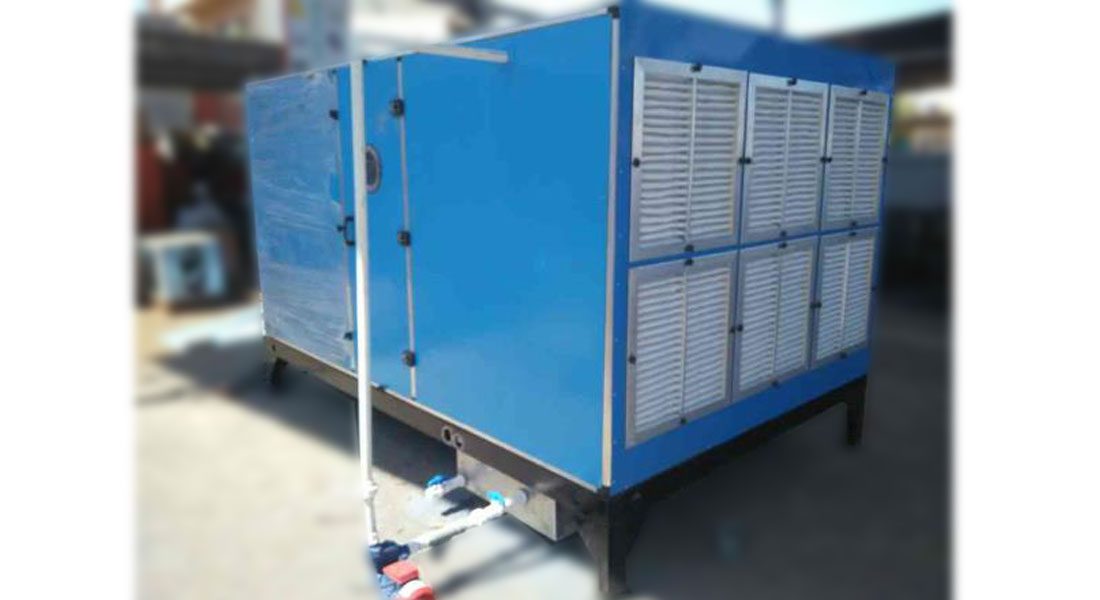
- Evaporative cooling. Systems designed and supplied to achieve reduced temperature and increased humidity with respect to ambient.
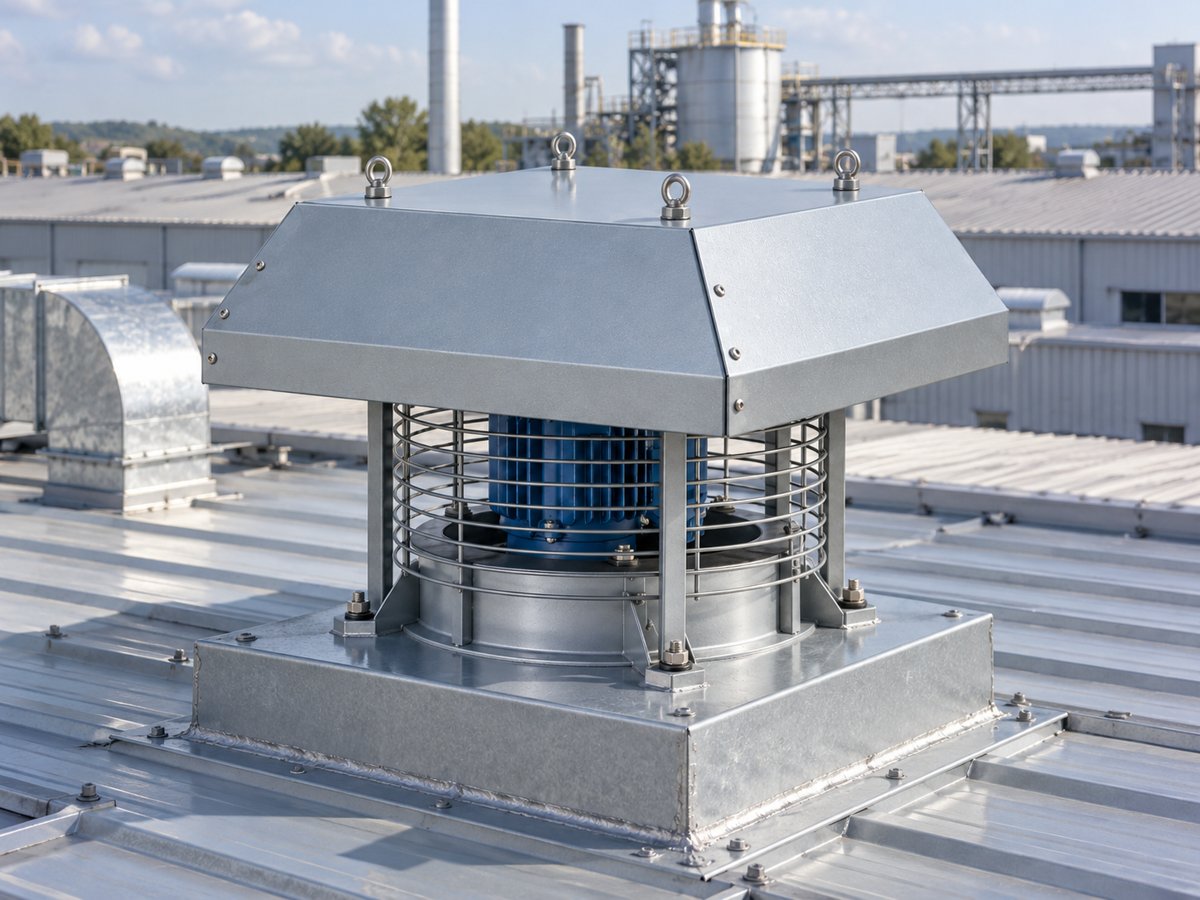
- Roof extractors. Incorporating axial fans to exhaust air from factories, suitable for inclined and flat roofs.
- Jet fans. For car park, tunnel and basement ventilation, with axial fans, silencer and fire proof motor.
- Air distribution. GI duct, diffusers and supply air grilles; gravity louvers for exhaust fans.
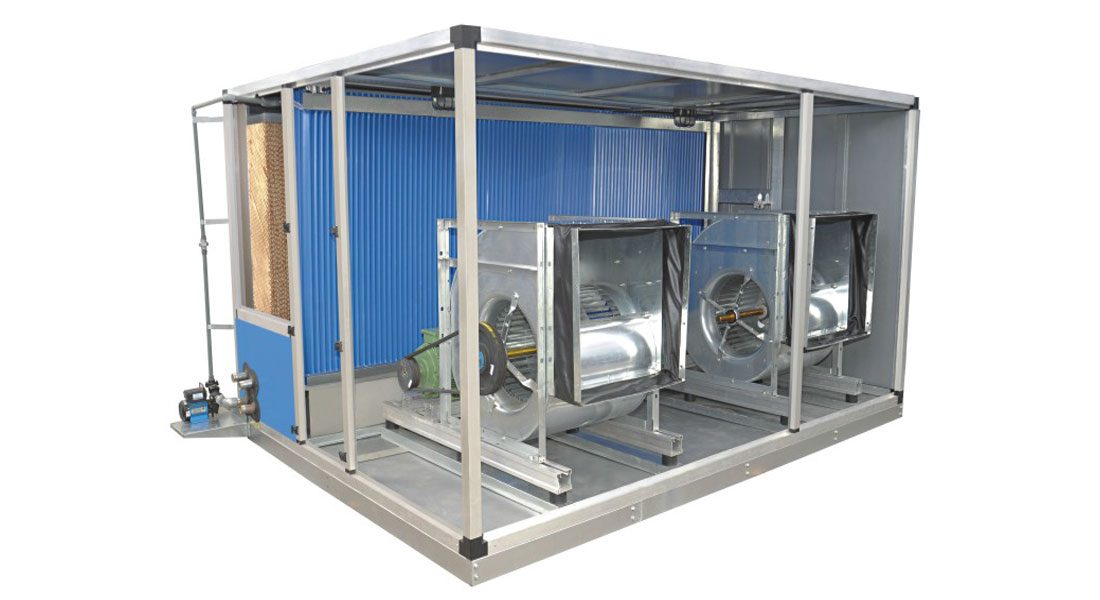
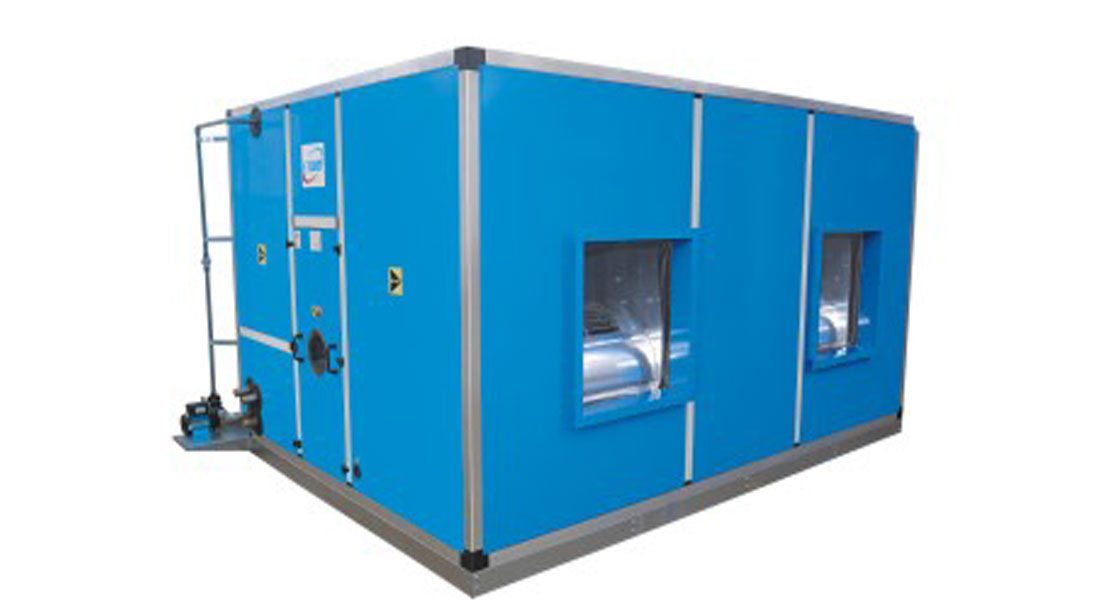
- Air handling units. Packaged fan, filter and coil units for conditioned supply.
Applications
| Application | What it does | Type usually selected |
|---|---|---|
| Roof Extractor | An axial fan in a weatherproof cowl mounted on an inclined or flat roof, exhausting hot air from the ridge of a factory shed. | Axial |
| AHU | A packaged unit with fan, filters, cooling or heating coil and mixing box that conditions and delivers supply air. Pre, fine and HEPA filters as the air quality requires. | Backward curved and forward curved |
Where it is used
Chemical & Pharma
Chemical plants exhaust corrosive fumes from reactors, dryers and storage into wet scrubbers, with fans in stainless steel, PP-FRP or rubber-lined construction. Pharma plants add clean-room supply through AHUs with pre, fine and HEPA filtration, and solvent recovery through adsorption towers. MVR blowers recompress vapour on evaporators and effluent plants.
Food Processing
Food plants need stainless steel fans for dryer and oven exhaust, dust extraction on milling and mixing with bag filters, and ventilation and AHUs that hold the processing area at the required temperature and air quality.
Automobile
Vehicle plants use fans on paint shop supply and exhaust, on ovens and dryers, on welding fume extraction, and for plant ventilation. Paint booth exhaust goes through wet scrubbers or adsorption towers for solvent; oven exhaust needs a hot air fan; the body shop needs fume extraction into bag filters.
Tyre
Tyre plants generate carbon black dust in mixing, rubber fume in curing, and heat everywhere. Bag filter fans on the carbon black handling system, fume exhaust on the curing presses, and heavy ventilation across the plant are the main duties.
Shipbuilding
Shipyards need portable and fixed ventilation for confined-space work inside hulls and tanks, welding fume extraction, and exhaust for blasting and painting halls with dust collection and scrubbing.
Nuclear
Nuclear facilities use ventilation systems that hold the building under controlled negative pressure, with HEPA-filtered exhaust and AHUs on the supply side. Fans are specified for reliability and for filtration efficiency rather than for dust or heat.
Information needed to select or quote
- Duty point. Volume flow and static pressure at the fan inlet, with the gas density and temperature or the conditions to derive it.
- Operating conditions. Site altitude, normal operating temperature and continuous or intermittent duty.
- Gas stream. Dust loading and particle size, corrosive species, moisture, upset temperature and any tendency of the material to deposit on the impeller.
- Mechanical. Rotation viewed from the drive end, discharge orientation and motor power.